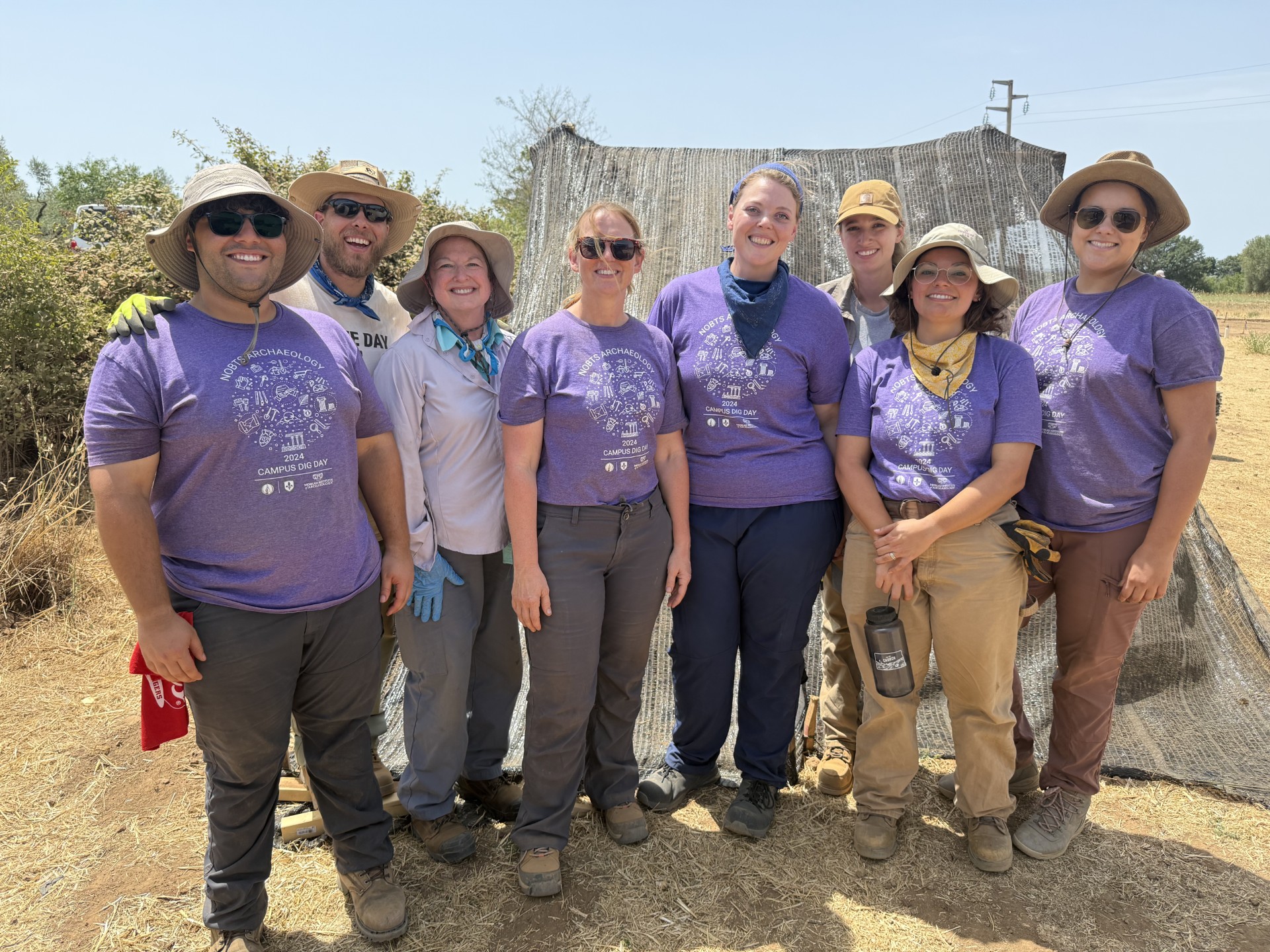

Building on the momentum from Monday afternoon (May 27), the team established routines and mastered individual jobs on May 28. And though they were digging through difficult, stony material at the bottom of the tunnel, the team pulled out 44 bags before lunch. Things slow considerably after lunch and when the short afternoon session was complete, the daily bag total reached 58. According to some of the veteran diggers at Gezer, the material encountered today was some of the most difficult material to remove – tightly packed cobblestones with very little dirt. No sign of that elusive last step.
Conservation work continued today on the Canaanite gate/wall area and the team’s work is beginning to show. Hopefully in the next few days we will post before and after photos of their progress.
A small team of four begin digging test pits/probes inside the cavern/cave. One probe was started last year late in the dig, a second was started today. The goal is to take these meter square probes all the way to bedrock. Today the probes yielded very little pottery. The one clearly datable piece dated to the Iron Age.
Work will continue on all three fronts tomorrow – the step, the wall conservation, and the cavern probes.
Hopefully the blog is building new readership this year. Since our newer followers may not know much about the Gezer Water System, some background may be in order. Here is a brief explanation of the water system:
Many rock-hewn water systems have been discovered in Israel. The water system in Gezer shares some characteristics with the other water systems like the ones at Hazor and Meggido. These tunnels were built to provide water for the inhabitants of a city during a siege. Even with the similarities, the Gezer system is unique.
Measuring 12 feet wide by 24 feet tall, the Gezer system is massive - much larger than the other water systems in Israel. The tunnel, cut at the 39 degree slope, stretches over 130 feet to the bottom. Some archaeologists believe this water system was cut by the Canaanites. Others date it much later to the time of Ahab. One goal of the current expedition is to settle this debate. So far, the team has not found conclusive evidence to support either theory.
Newer readers will also be interested in knowing how debris is moved from the bottom of the tunnel. The work is accomplished in five steps.